New Potential Treatment for Invasive Cancer

Breast cancer has been on the rise of becoming one of the number one death factors for women. Breast cancer has proved to be one of the deadliest diseases for women. At the earliest stage, women have a 7% chance of dying from breast cancer.

I recently examined New York Times article, ¨Immune-Based Treatment Helps Fight Aggressive Breast Cancer, Study Finds,¨ by Denise Grady which was about a major study proving that women with an aggressive type of breast cancer lived longer if they received immunotherapy plus chemotherapy, rather than chemo alone.
Screenshot 2018-10-28 at 9.48.04 PM

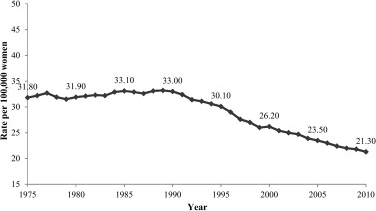
This graph demonstrates how the mortality rate for women has slowly gone down with new treatments developed.


The article emphasized how similar the number of deaths was to the number of women diagnosed with a more aggressive type of breast cancer. Chemotherapy has been a treatment used for all cancers but even it cannot treat a more invasive type. A combination of immunotherapy and chemotherapy has been proven to shrink tumors in the body and removing all signs of cancer.

I have lost many people in my life to breast cancer and so this breakthrough for potential survival is groundbreaking. The people who I have known that were diagnosed fought until their last day. Breast cancer was just too strong. They went through many therapies which would only cause them pain but they continued on with their fight.

Grady acknowledges that many deaths have been caused by the invasive type of breast cancer. According to Grady, “Although triple-negative tumors occur in only about 15 percent of patients with invasive breast cancer in the United States (or nearly 40,000 each year), they account for a disproportionate share of deaths, as many as 30 percent to 40 percent.” Grady’s point is that we have been needing to find some sort of therapy to treat this invasive type and groundbreaking news has proved that we have.

I agree that a combined treatment of immunotherapy and chemotherapy will be beneficial to many families and fighters because my experience with someone who had an invasive type confirms it. We lost her to Stage 4 breast cancer because the treatment was not strong enough.

Although I grant that this invasive treatment may be more harmful and intense to the patient receiving it, I still maintain that in the end, it will be beneficial. Ultimately, what is at stake here is being able to find a cure for all types of cancers and we can do that by targeting one at a time.
Medical Technology Is At Our Fingertips

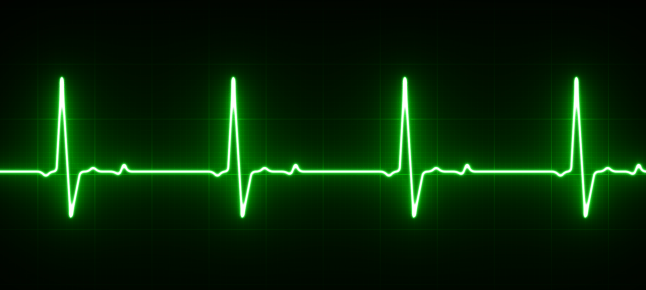
Imagine being able to perform an EKG, electrocardiogram test, right in the comfort of your own home. Advancements in technology have begun mixing with the medical world and the discoveries are groundbreaking. Apple is working on a feature that will allow their users to perform an EKG with their apple watch.

Screenshot 2018-10-20 at 12.50.26 PM

I recently examined New York Times article, “That New Apple Watch EKG Feature? There Are More Downs Than Ups” by Aaron E. Carroll which was about the idea that technology accessible to the public has a heart monitor should not be considered a medical device and it reflects wider problems with health screens. Doctors have always required a regular visit to monitor heart activity but with technology, it appears that doctors can monitor this activity from a distance.

Carroll agrees that this may not be as effective as Apple might convey due to false positives and negatives as well as not having this technology easily available to everyone.

According to Carroll, “Before granting clearance, the F.D.A. reviewed data collected by the Stanford Heart study for 266 people who got such a notification. Most of the notifications were wrong.” In other words, Carroll explains that during its tests, it proved to have many false positives and negatives which may concern those taking the test and their family for no apparent reason. False positives may stress the patient for no reason and false negatives may give the patient no reason for concern when they should have one. 

I agree that having advanced medical tests accessible on public technology is unreasonable because even though it may seem ideal and convenient it is not accurate and unreasonable.

Carroll states, “The people most in need of it, those who might benefit from tests and distance monitoring, are the least likely to get it.” Of course many will probably disagree with this assertion because many may be motivated to buy this technology if it has this feature. Although I grant that this would be convenient, I still maintain that it is not practical because the technology is expensive and therefore not everyone would have the privilege of having one. 

Ultimately, the idea of giving the public more access to technology is a good idea if it is executed correctly. Everyone must have an equal chance of purchasing an Apple watch and the programming of the feature must be accurate to almost never produce false positives or negatives.

The Gift Of Hearing Should Be Granted To All

The ability to hear and speak is often overlooked because many people are fortunate enough to have hearing. However, there is a deaf community in this world who does not have the same privileges. Technology has advanced in terms of medicine and found some solutions. A cochlear implant.

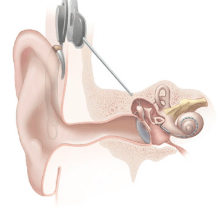
A cochlear implant is an electronic device used for medical purposes that is implanted in the damaged inner ear and provide sound waves directly to the brain. Those with hearing impairment will be able to recognize sound with the implant.

Screenshot 2018-10-12 at 9.58.07 AM                       Screenshot 2018-10-12 at 9.57.54 AM

In Unlocking the World of Sound for Deaf Children, Jane E. Brody explains deaf children should be encouraged to receive cochlear implants earlier in their lives. Brody encourages that people who receive cochlear implants receive it earlier in life because it can shape their experiences differently and make it easier to learn. Brody believes it can alter the brain better the younger that one gets a hearing aid if it is before or during the critical period of learning.

Brody acknowledges that the idea of cochlear implants to fix hearing on people who have hearing impairment is revolutionary. Brody herself writes, “The earlier you get the implant, the more successful it is because the more auditory input the brain gets at an early age, the better the auditory skills you will develop.” In other words, Brody believes that this implant can have a more beneficial effect on a person the earlier in their life they receive it.

In Brody’s view, receiving a cochlear implant “revolutionized the world…making it easier to communicate in all kinds of situations [making college and jobs possible]” Brody’s point is that the implant has proven beneficial in many situations the most for the person themselves.

The ability to hear is a gift that some of us are not granted. The implant gives the possibility to receive that gift, so why not grant our own children it? Brody surely is right that children who are deaf should receive cochlear implants because according to many recent studies it has benefited their learning experience significantly.

Of course, many parents will probably disagree with this assertion that their children need cochlear implants because some people of the deaf community may argue that deafness should not be “corrected.” Although I grant that deafness is nothing that needs to be corrected, I still maintain that it could make life easier on the child as well as his parents. Parents would save time in learning sign language and their child could learn a language in the critical months to be on track.

Ultimately, what is at stake here is that children are losing valuable learning time because they may not receive cochlear implants until they are older. At a certain point in their life, speaking a language will be almost impossible because they missed the critical period of learning.

Given the opportunity to correct someone’s hearing, it should be taken. People often overlook that hearing is a gift and many people don’t have it. However, with revolutionizing technology parents of hearing-impaired children should be encouraged to get a cochlear implant for their child preferably early in life to give their child the full life experience.

Is the flu shot all that effective?

For the past 78 years, many people of our society have received a flu shot. The flu shot has effectively reduced the high risk of a large population being infected by a flu virus. Although not everyone receives a flu shot each season, it can benefit society as a whole from flu from spreading.

We have also seen that many people chose not to receive the flu shot as they believe it only increases their chances of getting the flu. So ultimately which is more beneficial?

I recently examined New York Time article, “Over 80,000 Americans Died of Flu Last Winter, Highest Toll in Years” by Donald G. McNeil Jr. which reviewed the risk that the flu shot poses. An unusual amount of people died from the flu in the last season which leads scientists to question how effective the flu shot is.

Screenshot 2018-10-07 at 4.04.15 PM

According to McNeil Jr, “More than 80,000 Americans died of the flu in the winter..90 percent of those deaths were in people over age 65, the flu also killed 180 young children and teenagers….high mortality rate was unusual because it was caused by a ‘normal’ flu season, not by a new pandemic influenza strain.” Scientists face a mystery as to how the flu was more harmful this past season if the strain was normal.

The vaccine was not as effective as previous years which leads me to question how effective this “treatment” is that is being promoted by doctors. Many doctors often encourage patients to receive the flu shot to hopefully prevent them from catching the flu.

Perhaps this season, doctors should investigate the other types of variables put into the flu shot to eliminate all types of the flu. With flu shots being as promoted as they are, they should have at least a 50% guarantee that those who receive the shot will not catch the flu.

A Potential Reduction Of Heart Disease Risk May Be Around The Corner

As our society advances, our lifespan is slowly increasing. New technology allows for findings on how to extend lifespan. We are slowly finding cures to diseases that used to be deadly.

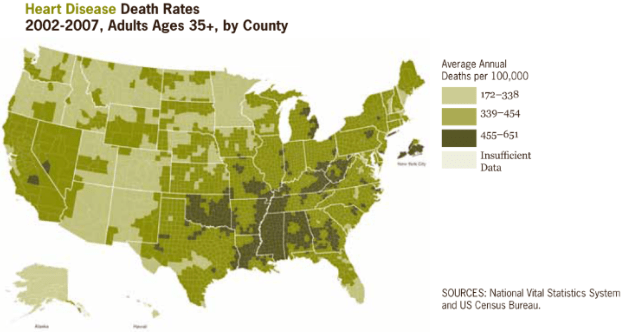
Heart disease and Type 2 diabetes are extremely common in the US. 9.6% of the US population has some form of diabetes in their lifetime and about 1 in every 4 people die from heart disease. These diseases can be deadly with no possible cure but we have now found a way to potentially reduce this risk.

Screenshot 2018-09-29 at 10.08.23 AM

I recently examined New York Times article “Fish Oil Drug May Reduce Heart Attack and Stroke Risk for Some” by Anahad O’Connor which was about large doses of an omega 3 fatty acid in fish oil proving to sharply reduce the rate of cardiovascular events in people with a history of heart disease or Type 2 diabetes

A new trial focused on a different group of those with a history of cardiovascular events, type 2 diabetes and high blood pressure. This group had unusually high levels of triglycerides, which make up natural fats and oils in the body. However, having a high level of triglycerides can be dangerous and increase risk for heart diseases.

A treatment known as Reduce-IT worked on those with high triglyceride levels and there was a 25% reduction in their relative risk of heart attacks, strokes, and other cardiac events.

Many people who are aware of their risk for heart disease or type 2 diabetes as it runs in the family, takes fish oil. Fish oil has been popular to protect against heart disease because of its high levels of omega-3 fatty acids and its blood thinning effects. There is a history of heart disease and Type 2 diabetes in my family, therefore I must be cautious about how to possibly prevent this risk.

Reduce-IT provides hope for many patients and families who have an extremely high risk of heart disease and Type 2 diabetes. The idea of a potential solution to this deadly case is groundbreaking. Many of my family members have passed due to heart disease and this what seems simple solution may be able to prevent more.

With new treatments such as this one, our medical society is slowly discovering more and more about the diseases that many people face. As our technology advances, so do we.

The After-Effects of Smoking

Over the years, our society has become less smoker friendly and more aware of the harmful effects of smoking. According to a New York Times article, fewer than 20% of Americans still smoke. But this is not 0.

Smoking doesn’t just end when the cigarette bud is put out. Residue sticks behind on clothes, skin and even furniture, in the environment, that one was smoking. To the smoker, this is not as harmful because they are the ones smoking, but to the innocent people such as their children, it can have more harm than one realizes.

Recently, I examined New York Times Article, “The Risks to Children From Adults Who Smoke,” which argued that the detrimental effects don’t stop at the smoker but also affect everyone around them, especially children. Jane E. Brody, the author, has done extensive research on how a parent smoking can affect their child’s health.

Brody argued, “Society does not tolerate exposing minors to asbestos, arsenic, alcohol, or lead yet it acts as if tobacco smoke is different.” Our society has become immune to the idea of smoking cigarettes as if it is not harmful to our environment. Although many studies have proven that smoking can be harmful to the smoker and all those around them, we have not made any progress in eliminating smoking entirely.

Screenshot 2018-09-23 at 12.34.57 PM

According to Brody, “3000 deaths have resulted from lung cancer developed from secondhand smoke and tens of thousands from heart disease.” This ratio seems unreasonable. Why do people, who are against smoking knowing the harmful effects, have to suffer the consequences?

The idea of second and thirdhand smoke reaching children and affected their own health seems unfair. Children whose parents smoke are prone to developing respiratory infections in their childhood and later in life. They are forced to inhale these toxins against their will because the environment is in their everyday life.

I strongly believe that the idea of children being exposed to secondhand and thirdhand smoke is unfair. We are putting our own children at risk. Many children are developing ear infections, coughs, colds, bronchitis, pneumonia, tooth decay, wheezing, shortness of breath to name a few. But the list continues on. Do we really want to continue putting innocent children at an elevated risk for developing all of these?

Adults make their own choice to smoke but children suffer from it. Our society needs to realize that smoking does not just harm those who are choosing to do it.

A Potential Solution for Rare Diseases

Many of us have had a relative or someone immediate in our lives pass away from a rare disease. Rare diseases can be debilitating and sometimes deadly. Since these diseases are rare, we face the frustrating conclusion that no treatment or cure has been developed. But, the future of medicine may be nearing.

I examined New York Times article, “A Battle Plan For a War on Rare Diseases,” which discussed Bertrand, a child born with an imperative genetic disease, and how his father, Dr. Matthew Might, was able to discover therapy for him. He worked on research to find medicine and treatment for a rare mutation that only about 60 other people live with. It took Dr. Might four years to discover what condition his son had, find a treatment, and work with a company to develop a stronger version of the drug.

The idea of personalized treatment opens up a world of possibilities in terms of medicine discovery and efficiency in how it is developed. Dr. Might strongly believes that if more doctors work with families of children who have rare diseases, we will be able to find many treatments and therapies. Sharing information from one case with the world will put us farther down the road of discovery than we have ever been.

Our world has advanced rapidly in the past century and with that comes a longer healthier lifestyle. As we become more developed, we are beginning to discover rare diseases that a very small percent of the population are diagnosed with. With this, we are expecting to find cures to these diseases.

We are running into a problem where it is not common to find treatments for rare diseases because only a small percent of the population have them. People who are close to those with rare diseases such as parents must work together on research to find therapies.

I believe it is not this simple as Dr. Might proposes to complete this task. Scientists work for years trying to make some progress in finding cures for diseases. So what makes a cure for rare disease easier to find especially since the population to test the therapy on is smaller?

Although it seems step by step simple, I believe it would take many years to develop treatments for rare diseases but as long as we work towards it, we can find it.