Over the years, our society has become less smoker friendly and more aware of the harmful effects of smoking. According to a New York Times article, fewer than 20% of Americans still smoke. But this is not 0.
Smoking doesn’t just end when the cigarette bud is put out. Residue sticks behind on clothes, skin and even furniture, in the environment, that one was smoking. To the smoker, this is not as harmful because they are the ones smoking, but to the innocent people such as their children, it can have more harm than one realizes.
Recently, I examined New York Times Article, “The Risks to Children From Adults Who Smoke,” which argued that the detrimental effects don’t stop at the smoker but also affect everyone around them, especially children. Jane E. Brody, the author, has done extensive research on how a parent smoking can affect their child’s health.
Brody argued, “Society does not tolerate exposing minors to asbestos, arsenic, alcohol, or lead yet it acts as if tobacco smoke is different.” Our society has become immune to the idea of smoking cigarettes as if it is not harmful to our environment. Although many studies have proven that smoking can be harmful to the smoker and all those around them, we have not made any progress in eliminating smoking entirely.
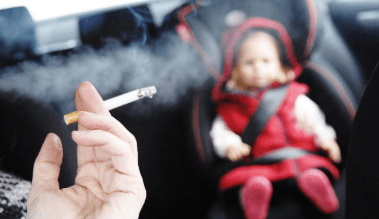
According to Brody, “3000 deaths have resulted from lung cancer developed from secondhand smoke and tens of thousands from heart disease.” This ratio seems unreasonable. Why do people, who are against smoking knowing the harmful effects, have to suffer the consequences?
The idea of second and thirdhand smoke reaching children and affected their own health seems unfair. Children whose parents smoke are prone to developing respiratory infections in their childhood and later in life. They are forced to inhale these toxins against their will because the environment is in their everyday life.
I strongly believe that the idea of children being exposed to secondhand and thirdhand smoke is unfair. We are putting our own children at risk. Many children are developing ear infections, coughs, colds, bronchitis, pneumonia, tooth decay, wheezing, shortness of breath to name a few. But the list continues on. Do we really want to continue putting innocent children at an elevated risk for developing all of these?
Adults make their own choice to smoke but children suffer from it. Our society needs to realize that smoking does not just harm those who are choosing to do it.

 Health & Medicine Today