The ability to hear and speak is often overlooked because many people are fortunate enough to have hearing. However, there is a deaf community in this world who does not have the same privileges. Technology has advanced in terms of medicine and found some solutions. A cochlear implant.
A cochlear implant is an electronic device used for medical purposes that is implanted in the damaged inner ear and provide sound waves directly to the brain. Those with hearing impairment will be able to recognize sound with the implant.

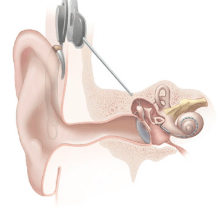
In Unlocking the World of Sound for Deaf Children, Jane E. Brody explains deaf children should be encouraged to receive cochlear implants earlier in their lives. Brody encourages that people who receive cochlear implants receive it earlier in life because it can shape their experiences differently and make it easier to learn. Brody believes it can alter the brain better the younger that one gets a hearing aid if it is before or during the critical period of learning.
Brody acknowledges that the idea of cochlear implants to fix hearing on people who have hearing impairment is revolutionary. Brody herself writes, “The earlier you get the implant, the more successful it is because the more auditory input the brain gets at an early age, the better the auditory skills you will develop.” In other words, Brody believes that this implant can have a more beneficial effect on a person the earlier in their life they receive it.
In Brody’s view, receiving a cochlear implant “revolutionized the world…making it easier to communicate in all kinds of situations [making college and jobs possible]” Brody’s point is that the implant has proven beneficial in many situations the most for the person themselves.
The ability to hear is a gift that some of us are not granted. The implant gives the possibility to receive that gift, so why not grant our own children it? Brody surely is right that children who are deaf should receive cochlear implants because according to many recent studies it has benefited their learning experience significantly.
Of course, many parents will probably disagree with this assertion that their children need cochlear implants because some people of the deaf community may argue that deafness should not be “corrected.” Although I grant that deafness is nothing that needs to be corrected, I still maintain that it could make life easier on the child as well as his parents. Parents would save time in learning sign language and their child could learn a language in the critical months to be on track.
Ultimately, what is at stake here is that children are losing valuable learning time because they may not receive cochlear implants until they are older. At a certain point in their life, speaking a language will be almost impossible because they missed the critical period of learning.
Given the opportunity to correct someone’s hearing, it should be taken. People often overlook that hearing is a gift and many people don’t have it. However, with revolutionizing technology parents of hearing-impaired children should be encouraged to get a cochlear implant for their child preferably early in life to give their child the full life experience.

 Health & Medicine Today